
On 18 June 2025, at the Municipal Auditorium “Bruno Ramalho” of Carauari, 75 families from the Riozinho area received formal land titles through the Mejuruá Project, sponsored by Iamazonia and implemented locally by BR Arbo.
Many families live in the Amazon on land under posse – possession without a formal deed. This allows use of the land but leaves people vulnerable to disputes, removals, and outside pressure. The Mejuruá Project provides propriedade or full legal ownership, registered at the notary delivered free of charge to families. Unlike instruments such as the TUC (Common Use Territory) or CDRU (Real Right of Use Concession), which grant only the right of use, property titles provide permanence and legal certainty.
By linking this recognition with a commitment to act as guardians of the forest, the project turns informal occupation into a tool for conservation while giving local riverside families the foundation to invest in their future.
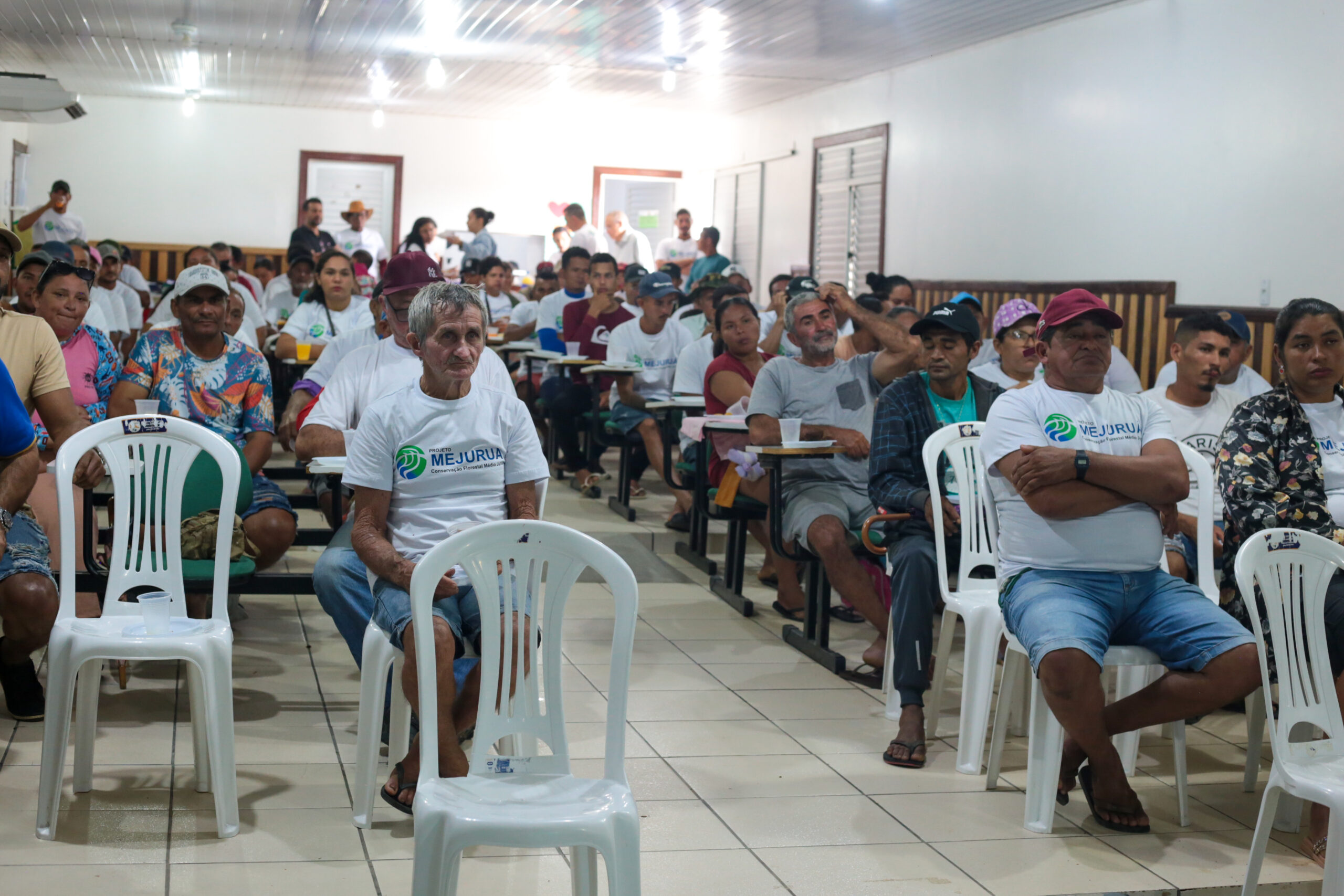
The Forest Angels program formalizes this mutual commitment: families who receive titles agree in writing to help monitor and keep the forest standing. This strategy prioritizes riverbank areas, which are most vulnerable to deforestation in a region without road access, where waters are the only transport routes.
BR Arbo, Iamazonia’s Brazilian partner for the Mejuruá Project, led the process in partnership with the Riozinho Residents’ Association (Associação dos Moradores do Baixo Riozinho or ASMOBRI). Joint teams visited households, mapped land, and held open meetings to ensure the process reflected residents’ priorities and respected their ways of life. In Riozinho, an estimated 108 families are eligible for regularization.
As Carlos Canabarro, President of BR Arbo, explained:
“Land regularization is much more than a legal-administrative process. For vulnerable families, it is the difference between uncertainty and dignity. With formal property rights, they not only secure permanence but also take on the role of guardians of the forest, transforming traditional occupation into active conservation.”
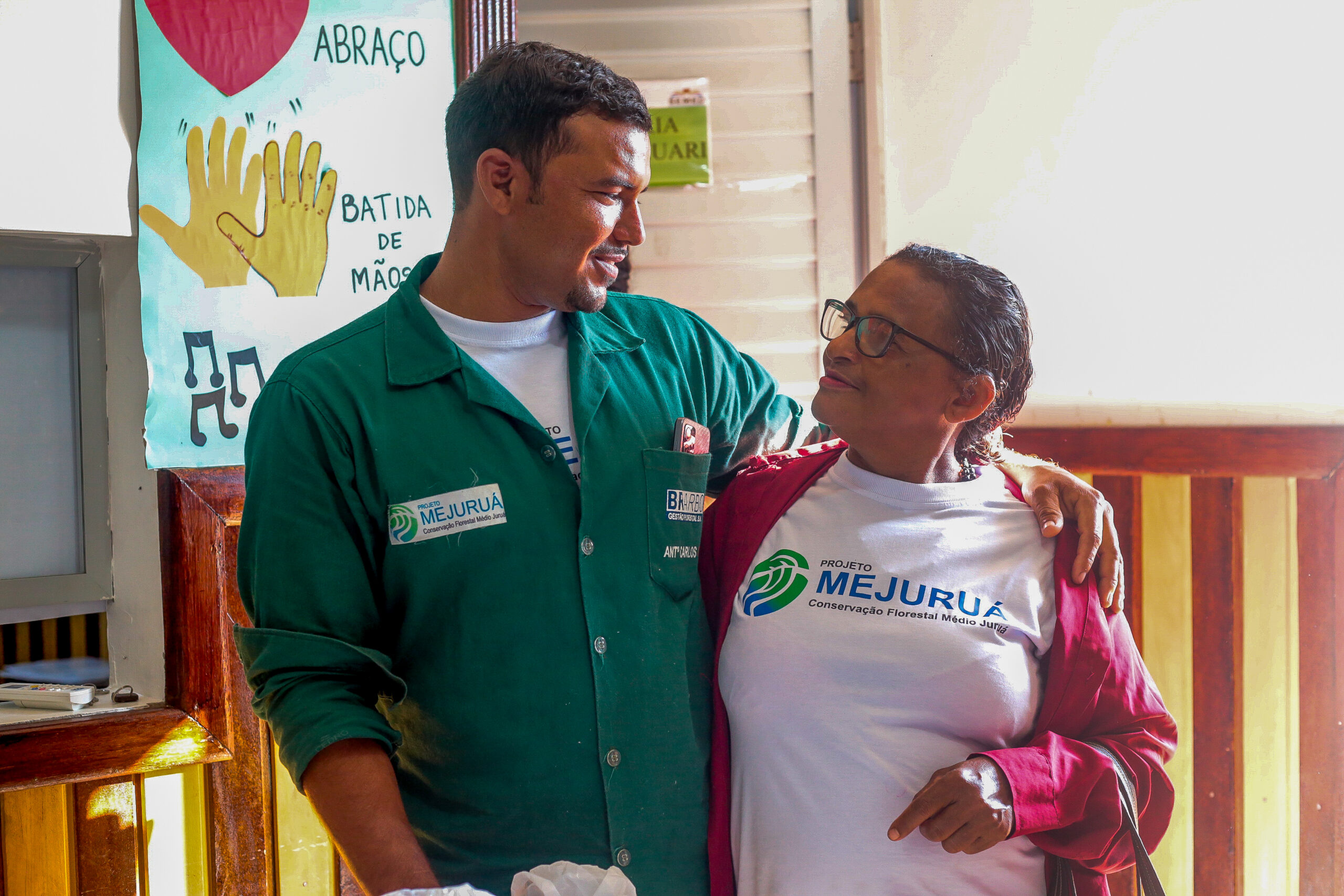
Land titles are being delivered alongside investments in essential infrastructure funded by the project and provided free of charge to families. Depending on location, residents are gaining access to clean water, electricity, or internet connectivity – improvements that enhance daily life and support environmental protection. Internet access, in particular, is being used for education and communication, and to monitor and report environmental crimes.
“Before, we had no proof that we owned land; we could not do anything: could not plant, could not sell, nothing. The land belonged to the company. Now, I feel very happy to have this document in hand. I hope the project continues. It is a good proposal, bringing us light, energy, and water. May it bring us even more opportunities for a better life,” said Edmilson della Vale dos Santos, one of the beneficiaries. For Iamazonia, this milestone illustrates how its model works in practice: putting people at the centre, using nature-based solutions, and working in open partnership to achieve measurable results. The Mejuruá Project shows that ecosystem regeneration can create real benefits for local families while meeting the highest standards and building a model that others can follow.