
The Mejuruá Project
Social Impact and Community DevelopmentThe Mejuruá Project is one of the largest and most innovative private REDD+ initiatives in the Amazon. It combines sustainable forest management and conservation, carbon credit generation and targeted investment in local development. Privately owned, internationally certified and independently monitored, the project protects around 679,000 hectares (6,790 km2) of forest and delivers measurable environmental and social impact.
It is the first project initiated and sponsored by Iamazonia, and a blueprint for future work. It provides a real alternative to deforestation by securing land, financing sustainable alternatives to legal clear-cut logging, and supporting long-term livelihoods in a remote and deprived area of the Brazilian Amazon. According to the Iamazonia model principles, the Mejuruá Project was designed in consultation with local communities (and its implementation area excludes land currently subject to official claims advanced by indigenous populations).
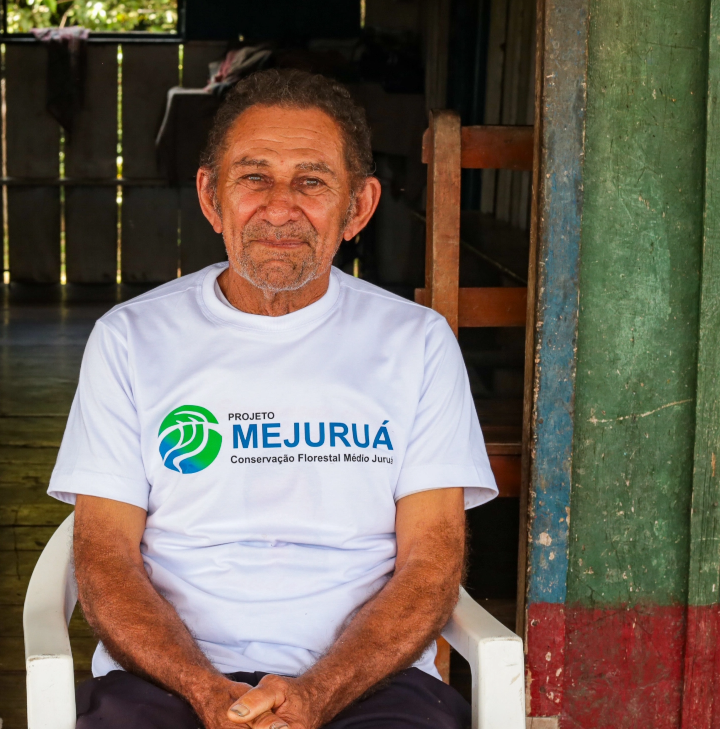
Social impact and community infrastructure
The Mejuruá Project allocates a minimum of 40 million USD to social investment over its first 30-years; of which 20 million USD in the first 5 years. This is central to Iamazonia’s model: preserving an ecosystem while improving the quality of life of those who depend on it.
Community engagement began well before the project launch in 2023, through meetings, field visits and open consultation. This continues through ongoing dialogue and consultation, allowing local priorities (such as access to direct land ownership for local people) to shape the design and implementation of activities.
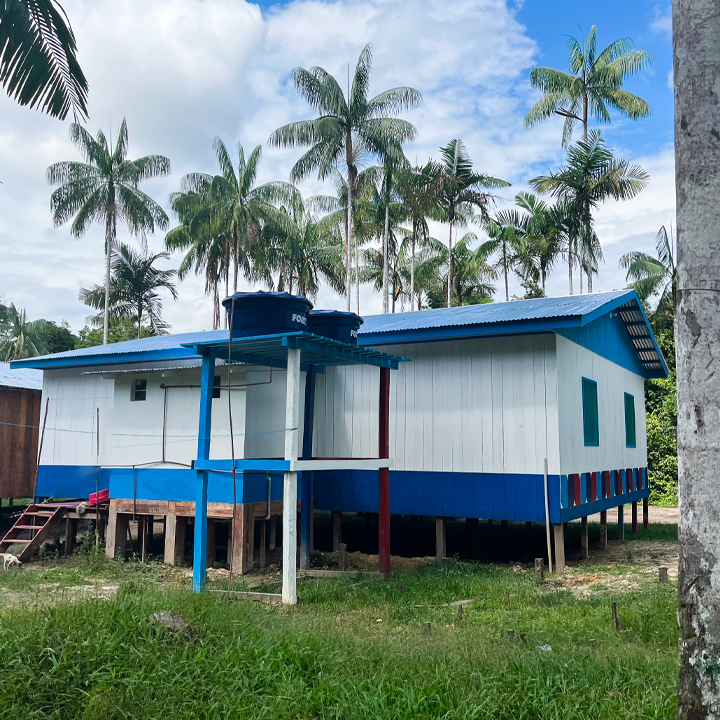
Initial investments already delivered include:
- Starlink connectivity at eight installation points in Riozinho Connectivity for health, learning and work: Iamazonia delivers Starlink access
- 96 Solar-powered energy kits
Powering people and protection: Iamazonia deploys river solar and plans biomass for Carauari - Clean water access for 89 families in Riozinho
Clean water, healthier homes: Iamazonia delivers safe supply to 89 families - Land title regularization for 75 families
Land rights in Riozinho: Iamazonia’s Mejuruá Project links families and forest protection - Refurbishment of local public schools and basic health logistics
Iamazonia backs Forest School for Carauari, advancing education in the Amazon
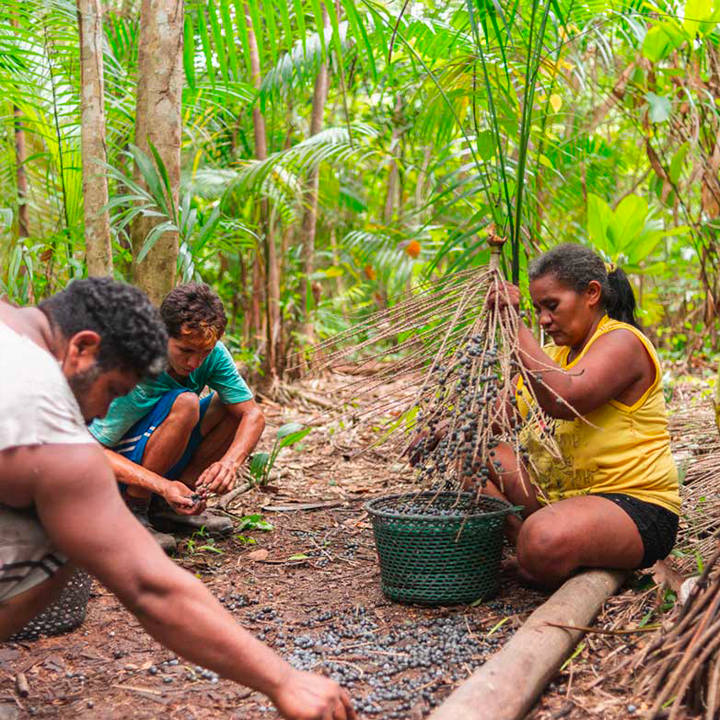
- Technical and material support for sustainable açaí cultivation
From forest to market: Iamazonia and ASMOBRI rebuild the açaí value chain - Generation of local electricity from local biomass refuse instead of imported diesel (planned 5 MW unit, >25,000 MWh/year)
Powering people and protection: Iamazonia deploys river solar and plans biomass for Carauari
Further planned actions include the funding of construction of the second site of the Forest School (an initiative of the Brazilian State of Amazon), improved healthcare access, and expanded local employment. Training opportunities in conservation, logistics and monitoring are designed with a focus on the inclusion of local women and young people. Iamazonia backs Forest School for Carauari, advancing education in the Amazon
A further example of simple, effective, common-sense approach of Iamazonia is we plan to gift processed wood fiberboards produced by our plant locally. This will help stop the practice whereby locals routinely cut trees to build houses using chainsaws, which is wasteful and destructive for the forest and provides poor building materials for houses.
Our activities will also fund the construction of a modern sustainable wood processing plant, which will operate according to FSC rules as part of our Sustainable Forest Management (SFM) work. This will add economic value to the wood locally.
The project will employ directly over 400 local people. They will receive training in health and safety matters, and in forest protection.
We will provide stable long-term employment, as the project runs for cycles of 30 years; to all practical extents the project never ends, neither does local value creation and local employment.
These investments aim to reduce structural pressures on the forest, replace predatory economic activity with sustainable alternatives, and ensure that conservation brings tangible benefits to communities on the ground.